
Winter in Maryland brings cold temperatures, snow, ice, and wind. For a dog living outdoors, exposure to harsh weather without adequate shelter can result in hypothermia, frostbite, joint pain — especially for small dogs, short-haired breeds, senior dogs, or those with health issues.
Even if a dog has a thick coat, that doesn’t guarantee safety: dogs still lose body heat, and paws, ears, and noses are vulnerable to frostbite.
For those reasons — and to comply with legal and humane standards — proper shelter and care in winter are essential.
Legal Requirements in Carroll County, Maryland
If you live in Carroll County, the law lays out specific standards for outdoor dog shelter, especially in cold weather.
Under Carroll County Code of Ordinances § 90.04:
Time period / temperature trigger
-Between December 1 and March 15 or anytime the “real or effective temperature” is 35°F or lower, owners must provide a proper dog shelter.
Shelter construction requirements
-The shelter must have a weather-proof roof.
-The entryway must be protected by a self-closing door, or an offset outer door, or a flexible flap made of windproof material.
-The floor must be solid and raised at least two inches off the ground.
-No interior surfaces may be metal (to avoid conduction of cold, condensation, or discomfort).
-The shelter should be oriented facing south or east, away from prevailing winds (to reduce wind chill exposure).
Bedding and insulation
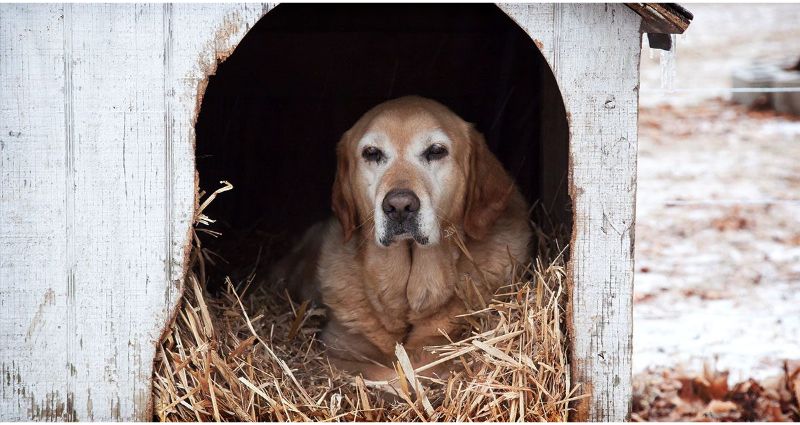
-Provide bedding such as wood shavings, straw, or other non-absorbent material, in sufficient quantity to insulate against cold and dampness. This bedding must be kept dry.
-If there is no artificial heat source, then the shelter should be small enough for the dog to warm the interior with its own body heat, but still large enough for comfortable entry, exit, and movement (stand up, turn around, lie down).
Water access
-Fresh water (that is not frozen) must be available at least twice daily. The water receptacle must be stable / unable to be tipped over.
Kennel / enclosure size (if using kennel)
-If a kennel is used for outdoor dogs, it must meet minimum size requirements as defined in a table in the ordinance — depending on the size and number of dogs.
In summary: for dogs in outdoor shelters during winter, Carroll County requires a well-constructed, insulated, wind-protected shelter; raised & dry flooring; proper bedding; orientation away from prevailing winds; and regular access to unfrozen water.
Maryland State Law: Minimum protections and general anti-cruelty requirements
Beyond county-level regulations, Maryland state law also sets general standards meant to prevent cruelty and neglect. Under Maryland Criminal Law § 10-623:
-A person may not leave a dog outside and unattended by a restraint that:
“Unreasonably limits the movement of the dog,” or uses a collar that is primarily metal or ill-fitting, or
Restricts access to “suitable and sufficient clean water or appropriate shelter,” or puts the dog in “unsafe or unsanitary conditions,” or causes injury.
Additionally, unless exceptions apply (e.g., a dog is actively engaged in certain lawful work or sporting activity), an owner may not leave a dog outside and unattended for more than 30 minutes without continuous access to suitable shelter during “extreme weather conditions.”
The law defines “suitable shelter” broadly but requires that it be appropriate for the dog’s species, age, condition, size, and type: with a solid floor, weather-proof roof, enclosed sides (entrance on one side), and ability to maintain the dog’s normal body temperature.
Thus, state law backs up — and sometimes provides a minimum standard — for safe outdoor dog shelter and prohibits leaving dogs outside and unattended in ways that restrict shelter, water, freedom of movement, or sanitary care.
Best practices for pet owners in winter (beyond the minimum legal requirements)
Meeting the letter of the law is the baseline — but good pet care goes beyond that. Based on animal-welfare guidance (e.g., from Humane Society of Carroll County) and common-sense winter hazards, here are recommended practices:
-Bring dogs indoors, when possible, especially in very cold, windy, or snowy weather. Short-haired, elderly, or arthritic dogs, as well as puppies, are particularly vulnerable to cold.
-Use insulated bedding (straw, wood shavings, pet-safe blankets) and check regularly to ensure it stays dry. Wet bedding loses insulation value and increases risk of hypothermia or illness.
-Monitor for frostbite and cold-weather injuries — paws, ears, noses are especially at risk. If frostbite is suspected (skin becomes red, pale or grey, scaly), thaw slowly with warm (not hot) towels and consult a veterinarian.
-Ensure regular access to unfrozen water and consider using heated water bowls or changing water frequently to prevent freezing.
-Limit time outdoors — even with proper shelter, long exposure to cold, wind, or snow isn’t ideal. Short, supervised outdoor time plus indoor refuge is best.
-Check the shelter periodically — ensure the entrance flap/door seals properly, bedding is dry and adequate, no water pooling or drafts, and orientation remains away from wind exposure.
What happens if you don’t comply — legal consequences & animal welfare risks
Under state law (Maryland Criminal Law § 10-623), leaving a dog outside and unattended without proper shelter or water — or using an improper restraint — can be a civil offense.
Local animal-control or humane-society agencies may intervene if a complaint is filed. In addition to legal risk, there’s a serious risk to the dog’s health.
From a welfare standpoint, even compliant shelters may not fully protect a dog from prolonged exposure to cold — so bringing pets indoors or minimizing outdoor time in winter is often the most humane choice.
For dog owners in Carroll County (and more broadly in Maryland), providing proper outdoor shelter in winter is not just good practice — it’s the law. The regulations under Carroll County Code set clear shelter standards: weather-proof, insulated, raised floors, protected entryways, orientation against wind, bedding, and unfrozen water. State law further prohibits neglectful tethering or leaving dogs unattended without shelter or water.
That said, legal compliance is the minimum. Responsible pet ownership in winter often means going beyond the minimum: monitoring weather, limiting outdoor time, using bedding, and whenever possible, letting dogs stay indoors.
The winter months bring risk — but with thoughtful preparation and fair consideration, pet owners can protect their dogs’ well-being.