
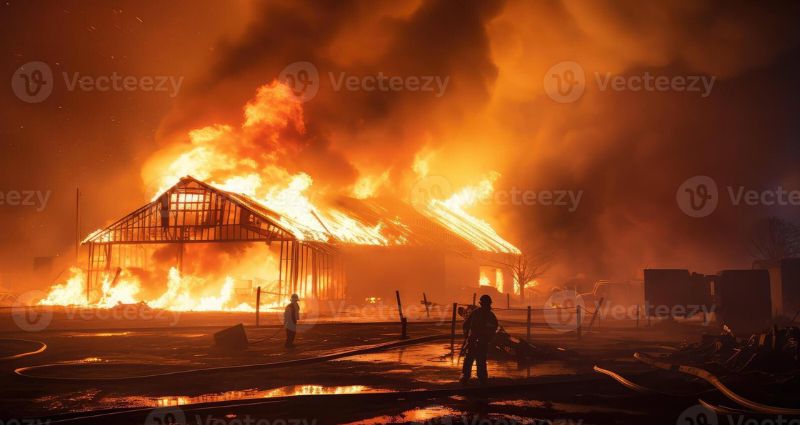
Few emergencies are as devastating and fast-moving as a barn fire. Within minutes, flames can spread through stored hay, bedding, wooden structures, and equipment—putting animals and people in immediate danger. While the thought is frightening, the good news is that most barn fires are preventable with the right planning and precautions.
Whether you manage a commercial farm or have a small backyard stable, these fire safety practices can dramatically reduce risk and help save lives.
Preventing a barn fire isn’t about luck—it’s about preparation. A few consistent safety habits can protect your animals, your barn, and your entire farm community.
Ways To Prevent a Barn Fire
Maintain a Clean, Clutter-Free Barn
-Sweep aisles daily to remove hay, dust, and bedding.
-Clear out cobwebs, which ignite quickly and help fires spread.
-Keep tools, feed bags, and equipment out of walkways.
-Store trash and debris outside the barn.
Prioritize Electrical Safety
-Faulty wiring is one of the top causes of barn fires.
-Have a certified electrician inspect wiring every year.
-Install wiring inside metal conduit to protect against rodents.
-Replace old or damaged outlets, switches, and fans.
-Avoid using extension cords or power strips—they are not safe in dusty barns.
-Unplug clippers, tools, and fans after each use.
Use Heating Devices Carefully
-Avoid heat lamps whenever possible; they are a leading ignition source.
-If heat is necessary, use commercial-grade, enclosed heaters designed for barns.
-Keep all heat sources far away from hay, bedding, and animals.
-Secure lamps or heaters so they cannot be knocked over.
Store Hay and Bedding Safely
-Improper hay storage can cause fires through spontaneous combustion.
-Test moisture levels before baling or storing hay.
-Keep new hay separate and monitor internal temperatures for 2–3 weeks.
-Store hay in a ventilated area, ideally in a separate building from animals.
-Never stack hay directly under electrical wiring.
Create a No-Smoking Zone
-Implement a strict no-smoking policy anywhere near barns.
-Post signs outside doors and hay storage areas.
-Provide a designated smoking area far from animals and flammables, if needed.
Store Fuels and Chemicals Properly
-Keep gasoline, propane, fertilizers, paint, oils, and cleaning chemicals in a separate, fire-safe structure.
-Never store fuel near electrical panels or equipment.
-Keep containers sealed and labeled clearly.
Maintain Equipment Regularly
-Clean fans, blowers, heaters, and motors to prevent dust buildup.
-Check for frayed wires and overheating.
-Service tractors and machinery regularly to prevent sparks.
Install Fire Detection and Safety Equipment
-Use heat or smoke detectors rated for barns (dust-resistant models).
-Install interconnected alarms that notify you even if you’re in the house.
-Place ABC fire extinguishers at all entrances and throughout the barn.
-Make sure extinguishers are inspected yearly.
Train Everyone on Fire Safety
-Teach staff, family members, and volunteers the barn’s fire procedures.
-Practice evacuation routes with animals so they’re easier to lead.
-Ensure everyone knows the location of extinguishers, exits, and emergency contacts.
Develop an Emergency Plan
-Keep halters and lead ropes at every stall.
-Mark emergency exits clearly and keep them unobstructed.
-Post a barn map showing exits, water sources, and firefighting equipment.
-Create a plan for animals that are hard to catch or have special needs.